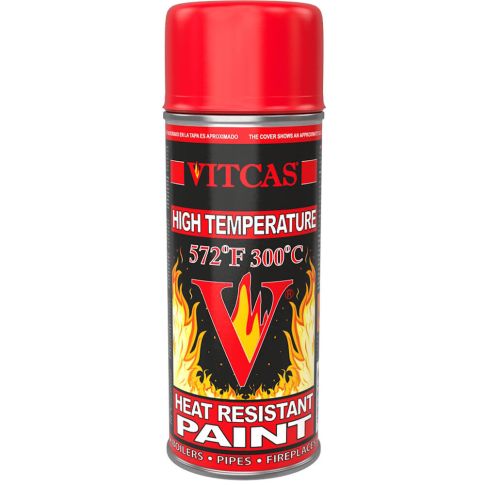
Start painting a steel furnace by checking which components the manufacturer allows to be renovated. Heat-resistant paint must match the substrate and temperature, but adhesion also depends on removing rust, loose old coatings, and grease. A thick new layer will not permanently cover these problems.
First, choose the right variant
Black heat-resistant paint Vitcas is offered for appropriate surfaces exposed to heat, including metal parts of ovens. The manufacturer states it is resistant up to 800°C. This parameter of this variant should not be automatically transferred to other colors or products.
Check compatibility with the previous coating. Do not paint cords, glass, or parts whose finish serves a different function. The temperature resistance marking by itself does not confirm food contact or approval for any part of the combustion chamber.
Surface preparation
Work on a cold appliance. Remove loose rust and flaking paint, then clean and degrease the metal according to the product recommendations. Protect neighboring parts and prepare ventilation. If you do not know the old coating, check compatibility and carry out a test on a small fragment.
Do not add a random primer. The layer under the paint must also correspond to the application, and the instructions for a specific paint may provide for application without a primer.
Application and initial heating
The black paint data sheet indicates several thin layers and preparation of the container by shaking. Temperature conditions, spray distance, and intervals between applications should be read from the label of the container you have. This is a better reference point than a single general procedure for all kiln paints.
Wait for the required drying. If the instructions call for baking, carry it out with adequate ventilation and according to the procedure. Do not try to speed up the work by performing intense firing earlier. After cooling, inspect the coating. Flaking or blistering requires checking the substrate and application conditions before applying the next layer.