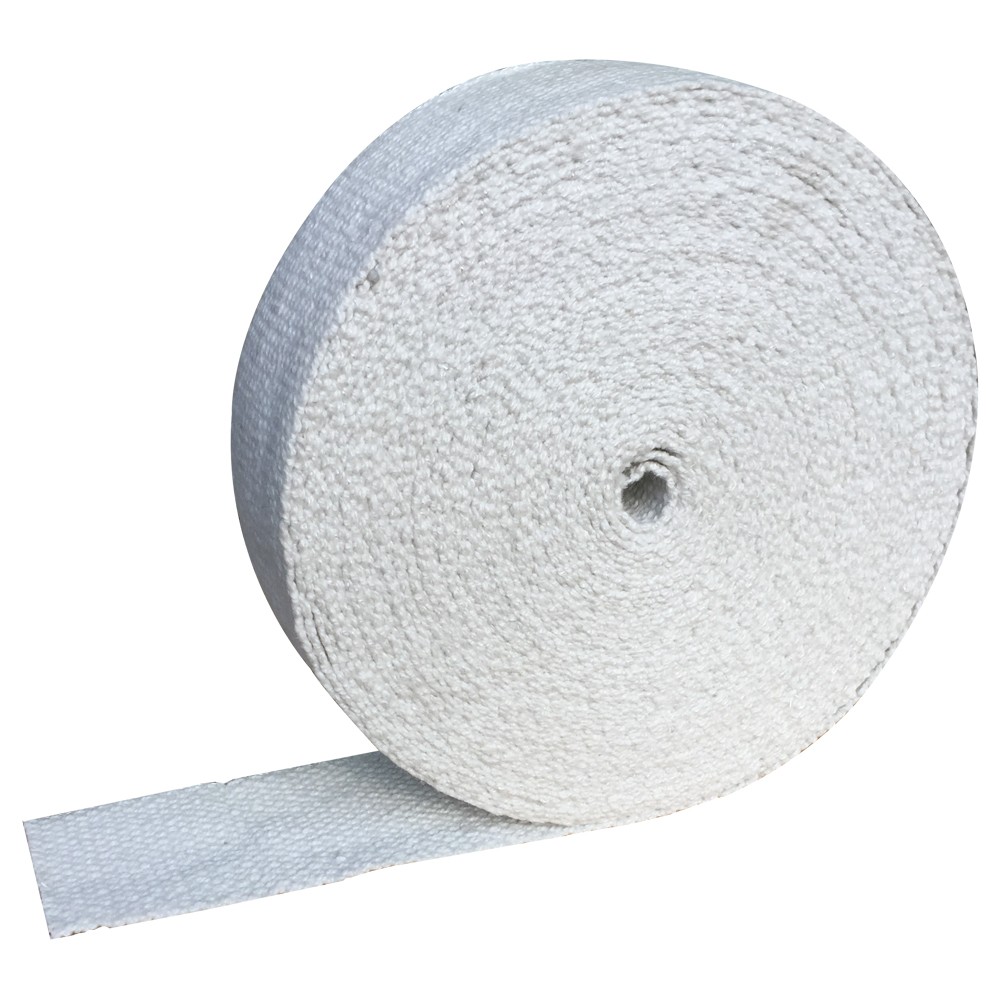
The ceramic tape allows insulation to be routed in a narrower strip than a wide mat. However, it is not a universal filling for every opening near a hot device. Start selection by describing the surface, required geometry, and connection function.
Check the type of fibre and format
Vitcas Ceramic Fibre Insulation Tape is a ceramic tape reinforced with stainless steel wire. The manufacturer specifies resistance up to 1260°C and insulating and sealing applications in compatible high-temperature systems. Choose the width and thickness according to the specific part.
Do not confuse it with glass fibre tape. The material, parameters, and maintenance method are separate. Also, a self-adhesive layer found in another product is not automatically part of every insulation tape.
Draw the material routing
Mark the beginning, end, and attachment point. Check whether the layer remains in place during installation and use. Accidental tensioning or packing can change the execution of the intended cross-section.
For a larger surface, use an appropriate format, for example ceramic fibre blanket, according to project requirements. A narrow tape does not automatically replace the full thickness of wide insulation. Each layer should have a clearly defined role.
Maintain the requirements of the entire system
Insulating the matching surface of the pipe is not the same as making a flue passage through a partition. A solution appropriate for the specific system is required for the passage. Tape temperature alone does not confirm the parameters of the complete component.
When fitting, follow the variant data sheet and provide fibre protection. Keep photos and information about width and fastening. During later repairs, you will then be able to recreate the system without guessing the number of wraps and the endpoint.